
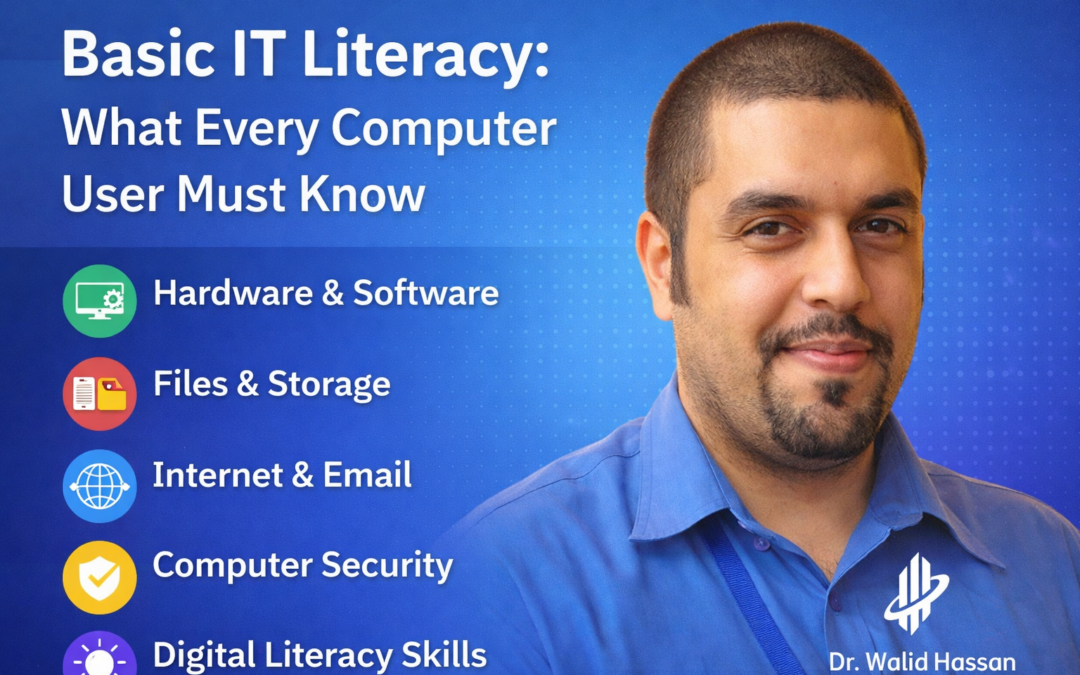
What Every Computer User Must Know – Basic IT Literacy
Basic IT literacy is no longer optional. In today’s digital world, almost every job, study task, and daily activity depends on computers. Understanding basic IT literacy helps users avoid common problems, protect their data, and work more efficiently.
Whether you are a beginner or an everyday user, having a solid foundation in IT basics builds confidence and reduces reliance on constant technical support.
Understanding Hardware and Software
One of the most important concepts in basic IT literacy is understanding the difference between hardware and software.
What Is Computer Hardware?
Hardware refers to the physical parts of a computer that you can see and touch. This includes the monitor, keyboard, mouse, processor, memory, and storage devices such as hard drives or solid-state drives. Hardware provides the physical foundation of the computer.
What Is Computer Software?
Software includes the programs and systems that make hardware useful. This includes the operating system, web browsers, office applications, and other tools. Without software, hardware cannot perform meaningful tasks.
Understanding how hardware and software work together is a core part of basic IT literacy.
Operating Systems and Their Importance
An operating system is the main software that controls how a computer works. Common operating systems include Windows, macOS, and Linux.
The operating system manages startup processes, runs applications, organizes files, and controls hardware resources. Keeping the operating system updated improves performance and protects the computer from security threats.
Files, Folders, and Storage Basics
Every computer user must understand how files and folders work.
Files and Folders Explained
Files store information such as documents, images, and videos. Folders are used to organize files and make them easier to find. Good file organization saves time and prevents data loss.
Types of Storage
Storage can be internal, such as a computer’s main drive, or external, such as USB flash drives and external hard drives. Cloud storage is also widely used, allowing users to access files from anywhere with an internet connection.
Understanding storage options is essential for basic IT literacy.
Internet and Email Awareness
The internet connects computers worldwide and provides access to information, services, and communication tools. Email remains the most common professional communication method.
Users must learn how to recognize suspicious emails, avoid phishing scams, and never open unknown links or attachments. Many security problems begin with unsafe email behavior.
Basic Computer Security Habits
Security is a key part of basic IT literacy.
Using strong passwords, updating software regularly, and avoiding unknown downloads significantly reduce security risks. Built-in security tools and antivirus software should always be enabled and up to date.
Most common IT problems are caused by ignoring these basic security habits.
Why Basic IT Literacy Matters
Basic IT literacy saves time, reduces frustration, and increases productivity. It empowers users to solve simple problems on their own and use technology safely and confidently.
Developing these skills is essential for every computer user in the modern digital world.